



If you’re considering Home Health Aide training, you’re preparing to help with personal care, health-related tasks, and the day-to-day needs that come with supporting someone at home. Training also gives you time to practice required skills before using them in a supervised care setting. Just as important, you learn to work around each person’s routines, comfort, safety, and level of independence.
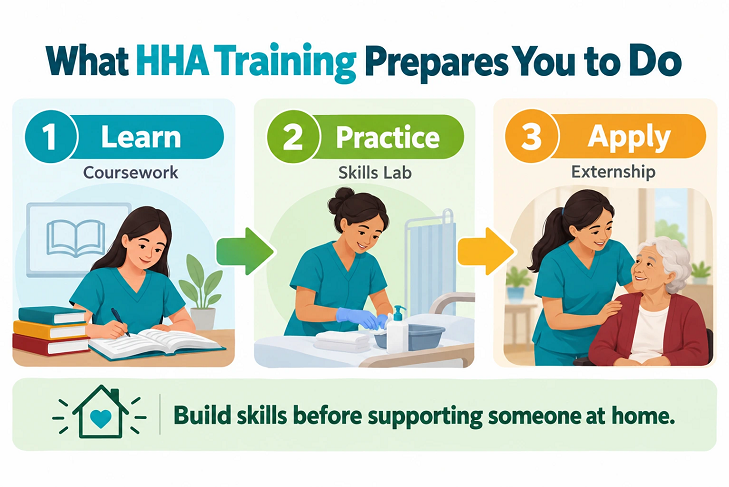
Learning these responsibilities in stages makes the work easier to understand. You first learn the material, then practice the skills, and later apply what you’ve learned under supervision. That progression gives you a clearer picture of what home-based caregiving actually asks of you.
At Interact Caribbean Homecare Training Center LLC, we understand that learning a skill is only part of caregiver preparation. Through our training programs, we help students connect classroom instruction with hands-on practice and the responsibilities they may face in a care setting.
Learn How Personal Care Fits Into Daily Life
Home care takes place around a person’s normal routine. That means helping with care needs while paying attention to how the person prefers to do things, what assistance they need, and what they can still do independently.
HHA training helps you become more aware of those details. A task may have a correct way to be performed, but the person receiving care still has preferences, habits, and boundaries that should be respected.
This is where patience and observation matter. You may need to follow care instructions while also noticing whether the person is comfortable or needs something explained differently. Those everyday interactions are part of providing respectful care.
HHA training includes personal care along with health-related tasks and supervised experience in a care environment.
Practice Skills Before Using Them in a Care Setting
Reading about a caregiving skill and performing it are different experiences. Practice lets you work through the steps, ask questions, and correct mistakes before you move into supervised field experience.
In our Home Health Aide training program, students practice required competencies in a laboratory setting and complete skills examinations during training. Before moving to the externship, students must finish the required written modules and successfully re-demonstrate the required skills.
The HHA program includes 93 clock hours and 20 required modules. The curriculum is available in English, Spanish, and Chinese.
Those details matter because they show how the course moves from instruction to practice. You aren’t sent into an externship before completing the classroom and laboratory requirements that come first.
Apply What You Learn During a Supervised Externship
The externship gives you a chance to use what you’ve practiced in an actual care environment. The HHA program includes an 8-hour supervised externship after the required coursework and skills re-demonstration are completed.
During that time, you apply personal-care and health-related skills while becoming more familiar with the pace and responsibilities of everyday caregiving. You also have an instructor available for guidance while you’re still learning.
At the externship site, the program maintains a Registered Nurse Instructor-to-student ratio of one instructor for every three students.
Depending on availability and the school’s affiliation arrangements, the externship may take place in a home care setting, congregate care setting, or assisted living facility. These experiences are completed at care settings that have an Affiliation Agreement with the school.
Learn the Habits That Matter in Home Care
Caregiving involves more than knowing how to perform a task. You also need to communicate clearly, follow instructions, and pay attention to the person you’re supporting.
Someone’s home is their personal space, not simply a work setting. Their routines may be different from what you’re used to. Respecting those routines can be as simple as listening before helping, explaining what you’re doing, or allowing the person to do what they can on their own.
Training also helps you understand when to ask for guidance. You won’t have the answer to every situation, especially while you’re learning. Knowing when to follow instructions, when to speak up, and when to seek help is part of responsible caregiving.
These habits are useful whether you’re practicing in a laboratory or working under supervision during an externship.
Understand What HHA Training Does and Doesn’t Determine
Completing HHA training is one part of preparing for caregiving work. Certification, credentialing, and employment requirements can differ depending on the jurisdiction and employer.
Before enrolling or applying for a position, check the requirements for the location where you plan to work. Training should not be treated as a guarantee of certification, licensure, or employment.
What HHA training can do is give you structured instruction, opportunities to practice required skills, and supervised experience with caregiving responsibilities. That preparation can help you better understand what the work involves before you take your next step.
At Interact Caribbean Homecare Training Center LLC, we want students to understand the responsibilities behind the skills they are learning. Our HHA training moves from classroom work to laboratory practice and then to supervised experience so you can see how those parts connect.
If you want to review current HHA training requirements, schedules, or enrollment information, you can set an appointment with us to talk through what to expect before you enroll.
Leave a Reply