



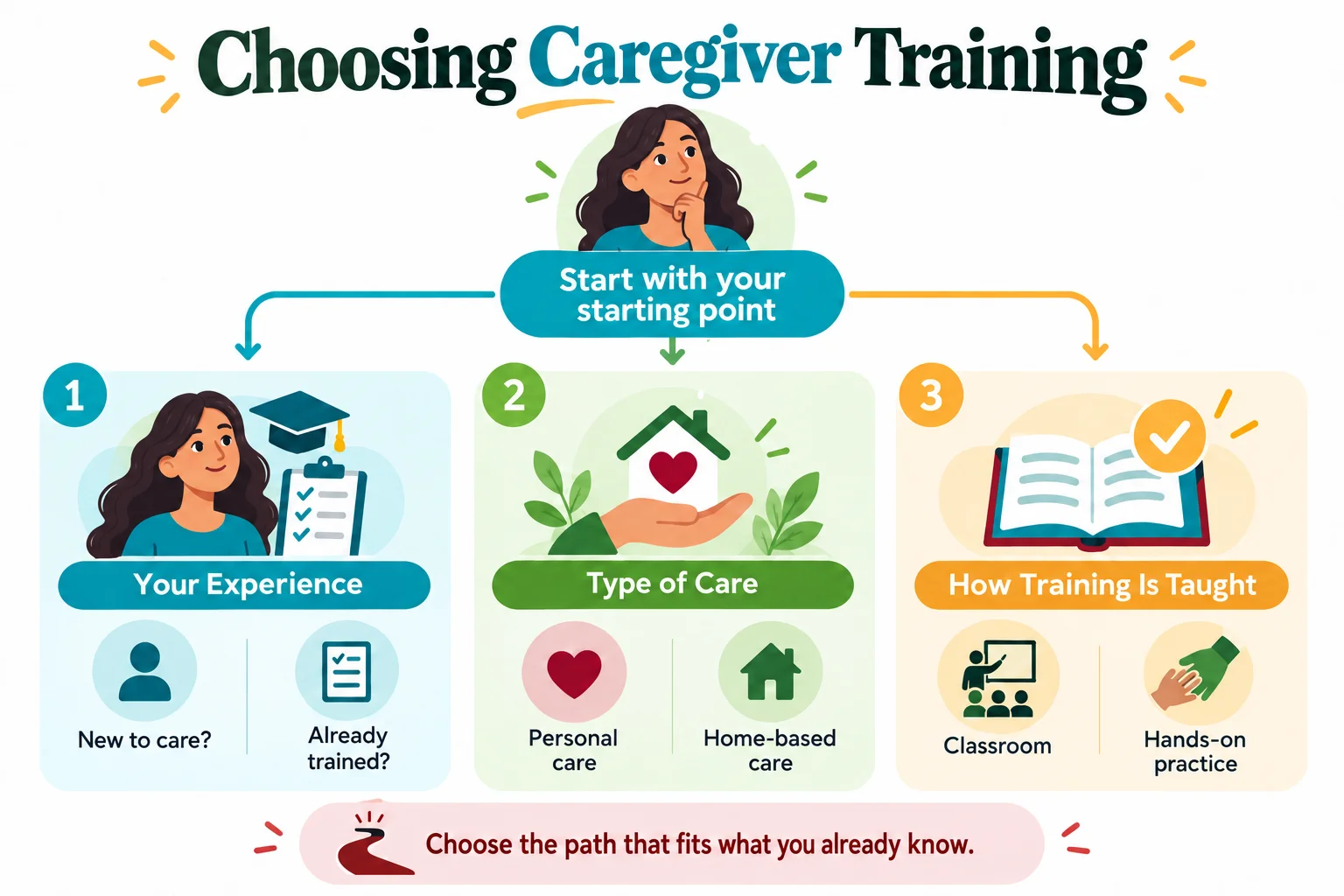
Starting caregiver training can feel like a big decision, especially when different programs prepare you for different responsibilities. A useful place to begin is with your own experience. Think about what you already know, the type of care you want to learn more about, and how you learn best. Those three questions can help you narrow your options without getting overwhelmed by course names or program details.
You do not need to understand every caregiver role before you begin. What matters more is knowing whether you are starting with basic personal-care skills, building on previous training, or looking for more experience with home-based care.
A structured learning environment can help you understand those responsibilities gradually, giving you time to learn, practice, and ask questions before applying new skills in a care setting.
At Interact Caribbean Homecare Training Center LLC, we understand that students do not all begin at the same point. We focus on helping you understand the responsibilities behind caregiving, practice important skills, and develop a respectful approach to supporting people in home and community settings.
Start With the Experience You Already Have
Your previous experience can tell you a lot about what kind of training to explore next.
If caregiving is new to you, you may benefit from learning the basics of personal care first. This can include understanding how to assist someone with everyday needs while paying attention to comfort, safety, and independence.
Our Personal Care Aide training program focuses on that foundation. Rather than expecting you to already know how caregiving works, the course helps you build knowledge and demonstrate essential skills as you progress.
If you already have personal-care training, your needs may be different. Repeating material you have already studied may not be what you are looking for. Instead, you may want to understand what additional responsibilities come with home health aide preparation.
The point is not to choose the program with the most hours or the longest list of topics. It is to find training that makes sense for where you are starting.
Think About the Type of Care You Want to Prepare For
Caregiving can involve different levels of support, so it helps to think about the responsibilities you want to understand better.
Some training focuses mainly on everyday personal care. Other courses introduce additional health-related responsibilities that may be part of providing care in a home setting. Those differences can affect what you learn and how much practice is included.
Our Home Health Aide training program combines classroom instruction with laboratory-based practice and supervised experience. This gives students a chance to work through required skills before applying what they have learned in an actual care environment.
That kind of structure may matter if you want more than classroom learning. It can help you understand how a skill is performed, why each step matters, and what it feels like to carry out those responsibilities under supervision.
As you compare your options, ask yourself what kind of caregiving work you are preparing to understand. That question is often more useful than simply asking which course sounds more advanced.
Look at How the Training Is Taught
What you learn matters, but so does how you learn it.
Caregiver education can include written lessons, demonstrations, competency checks, and supervised practice. Each part serves a different purpose. Classroom learning can help you understand the reasoning behind a task, while skills practice gives you a chance to apply what you have learned.
This is especially important in caregiving because many responsibilities involve both knowledge and judgment. Following instructions is one part of the work. Paying attention to a person’s comfort, routines, dignity, and level of independence is another.
When reviewing a training program, consider three questions:
- Will you have opportunities to demonstrate what you have learned?
- Does the course include hands-on practice?
- Will you receive supervised experience before completing the program?
These questions give you a clearer picture of what the learning process will actually involve.
Consider Whether You Are Building on Previous Training
If you already completed PCA training, you may be looking for a different path than someone entering caregiving for the first time. If you want to build on that existing training, you can consider a program that expands your skills for home health aide responsibilities.
Our PCA-to-HHA upgrade program is designed for students who already have a personal-care background and want to further their preparation. The course includes additional instruction, laboratory skills practice, and supervised experience related to home health aide responsibilities.
This distinction matters because your previous training should be part of the conversation when you are considering your next step. Instead of looking only at what a new course teaches, consider how it builds on the knowledge and skills you already have.
You may also want to review current enrollment requirements before making a decision. Training requirements and employment expectations can vary, so it is worth confirming what applies to the type of work you hope to pursue.
Ask Practical Questions Before You Enroll
Once you have a clearer idea of the training you want, look at the practical side of the program.
Start with the course schedule, language options, and learning format. These details can affect whether you are able to participate consistently and get the most from the instruction.
Then ask about skills practice and supervised experience. If the program includes an externship, make sure you understand when it takes place and what you must complete beforehand.
Finally, confirm the current admission and enrollment requirements. It is better to have a clear picture before registering than to make assumptions based on a course title alone.
Choose Based on Your Starting Point
There is no need to make caregiver training more complicated than it has to be. Begin with what you already know, think about the responsibilities you want to prepare for, and pay attention to how the course helps you practice what you learn.
At Interact Caribbean Homecare Training Center LLC, we believe students should understand the purpose and structure of their training before they enroll. Our approach is designed to help you build knowledge step by step while developing the practical skills and professional habits connected with caregiving.
If you are ready to learn more about program requirements, schedules, or current enrollment information, you can contact us to discuss your options.


Leave a Reply